
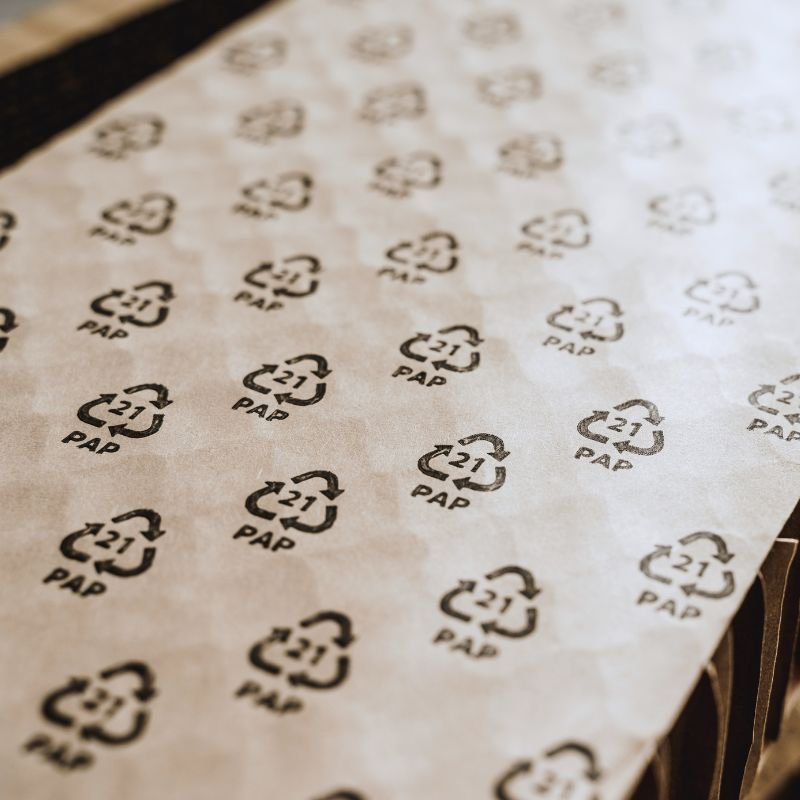
FSC-Certified Materials, Plant-Based Inks, Biodegradable Finishes and Green Factory: Forest Print’s Sustainable Credentials Explained
It’s easy for printers to describe themselves as eco-friendly. It’s harder to prove it. If you’re placing a job that needs to stand up to ESG reporting, procurement scrutiny, or your own brand’s sustainability commitments, vague green claims aren’t enough.
This article breaks down the credentials behind Forest Print’s production, what each one certifies in practice, and why the combination sets a standard that most eco-friendly printing services in Australia can’t match. For a broader overview of what genuine sustainability requires across the printing industry, see our guide to sustainable printing in Australia.
QUICK ANSWER
Genuinely eco-friendly printing rests on four verifiable credentials: FSC-certified materials for responsible paper sourcing, plant-based inks for lower emissions, biodegradable finishes that keep the finished piece recyclable, and Green Factory certification for audited manufacturing. Each is independently certified, unlike generic “eco”, “sustainable”, or “green” labels. Forest Print builds all four into its production, a combination rarely found together among environmentally friendly printing suppliers in Australia.
FSC-Certified Materials: What the Label Actually Verifies
FSC certification is the most rigorous paper sourcing standard in the printing industry. Certified materials are traced through every stage of the supply chain, from a responsibly managed forest through the paper mill and all the way to the finished printed piece, under the FSC’s Chain of Custody system. Each link in that chain is audited by an independent third party.
Few buyers realise how much verification sits behind a genuine FSC claim. Every supplier handling certified material carries its own certificate, and those certificate codes appear on supplier invoices and delivery documentation, so the claim can be checked rather than taken on trust.
If a supplier claims FSC-certified materials but can’t show supporting documentation, the claim isn’t verifiable, regardless of what their website says. You can check any certificate code directly at info.fsc.org.
Forest Print prints on FSC-certified materials, tracked and documented through the certified supply chain, and can produce FSC documentation for eligible jobs on request.
FSC, PEFC, Recycled Content and Unverified ‘Eco’ Claims:
A Plain Comparison
When you’re evaluating a print supplier’s sustainability credentials, it helps to know what each standard actually guarantees. Here’s how the main options compare.
| Credential | What It Verifies | Third-Party Audited? |
| FSC-Certified Materials | Full material trail from certified forest to finished printed product, tracked under the FSC Chain of Custody system. | Yes |
| PEFC | Similar to FSC in principle, covering sustainable forest management. It is less widely recognised in Australia, and fewer local suppliers hold it. | Yes |
| Recycled Content | Confirms a percentage of post-consumer or post-industrial recycled fibre. Does not verify forest sourcing or the full supply chain. | Varies |
| “Eco”, “Sustainable”, “Green” | No defined standard. No audit requirement. It can mean anything or nothing under the Australian Consumer Law. | No |
FSC is the only standard that tracks the material trail from forest to finished product. Unverified sustainability language, without supporting documentation, doesn’t meet the threshold set by the ACCC’s guidance on environmental claims.
Plant-Based Inks: What They Are and Why the Chemistry Matters
Conventional printing inks use petroleum-derived mineral oils as their carrier. During and after printing, these release volatile organic compounds (VOCs) into the production environment. They also make the printed substrate harder to process during paper recycling because the petroleum-based components resist deinking.
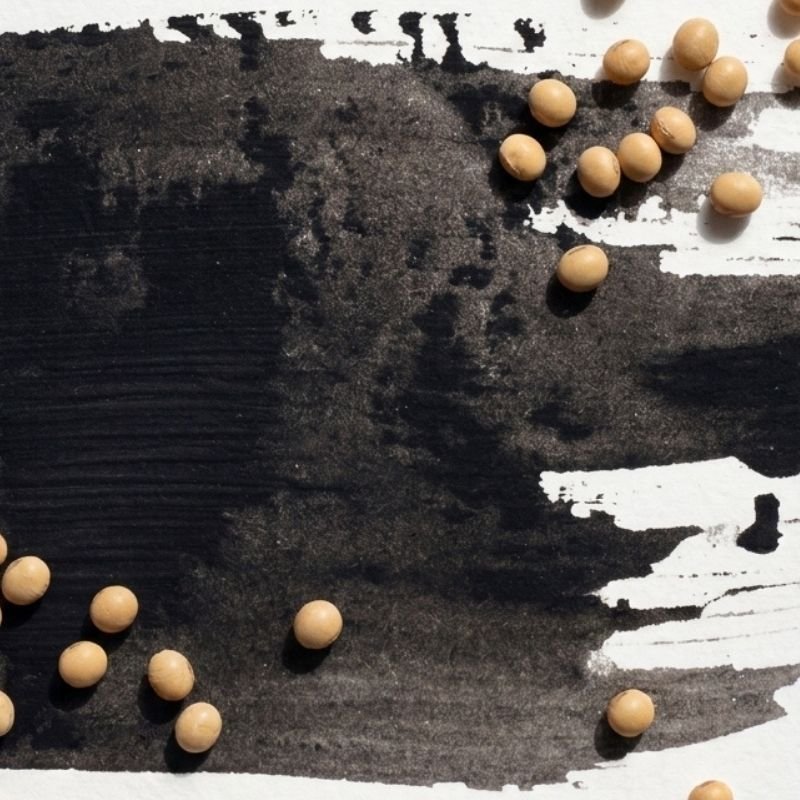
Plant-based inks, derived from soy, linseed, or other vegetable oils, produce significantly lower VOC emissions and are considerably easier to remove during recycling. Paper printed with plant-based inks is more likely to be successfully recycled, which means the environmental value of your FSC-certified or recycled stock isn’t undermined at the ink stage.
Forest Print offers plant-based inks across its full product range, including books and publications, sustainable packaging, and more.
The quality and colour fidelity of plant-based inks on modern offset presses are equivalent to those of petroleum-based inks for commercial print purposes.
Biodegradable Finishes: Why the Final Coating Determines Recyclability
The finishing stage is one of the most commonly overlooked parts of sustainable print procurement. A brochure or packaging item printed on FSC-certified stock with plant-based inks can be rendered non-recyclable by a single finishing choice: standard lamination.
Conventional gloss and matte laminates consist of polypropylene or polyethylene films bonded to the paper surface. Once applied, the plastic film can’t be separated from the paper during recycling, which means the entire piece contaminates the paper recycling stream and ends up in landfill. The same applies to standard soft-touch laminates and many conventional UV coatings.
Biodegradable alternatives, including water-based aqueous coatings, compostable laminates, and matte aqueous finishes, avoid this entirely. They provide comparable surface protection and a similar tactile quality without introducing plastic film that can’t be recovered.
Forest Print offers biodegradable finishes as standard. The finishing options offered across hardcover books, packaging, and other products are selected specifically to keep the finished piece recyclable.
Green Factory Certification: What It Means and Why It’s Rare
FSC, plant-based inks, and biodegradable finishes all address the materials used in a print job. Green Factory certification addresses where it’s made.
Green Factory is a Chinese government-administered certification programme that assesses manufacturing facilities against defined thresholds across four areas: energy consumption per unit of output, water efficiency, hazardous waste management, and environmental management systems. It’s not a self-declared standard. Facilities must pass an official government assessment and renew the certification periodically.
Only a small proportion of Chinese manufacturing facilities hold it. Forest Print’s manufacturing partner, Landl Printing, holds Green Factory certification at its Taizhou facility, alongside ISO certification.
If you’re sourcing print from an offshore manufacturer, this is the facility-level assurance that production itself meets audited standards, not just the materials going into it.
Ready to place a print job that covers every stage of the supply chain?
How to Verify a Printer’s Sustainability Credentials

If you’re evaluating a supplier’s credentials, the questions that matter are specific ones:
- Ask how they document FSC-certified materials, and check any certificate code at info.fsc.org.
- Ask what ink chemistry they use across their range.
- Ask whether their finishing options keep the finished piece recyclable, and whether they use standard plastic laminates.
- Ask which certifications their manufacturing facility holds and who issued them.
A printer with genuine credentials will answer each of those with specifics. Vague responses or an inability to provide documentation are reliable signs that the sustainability claims aren’t backed by third-party verification.
Why Holding All Four Credentials Sets a Higher Standard
Many printers offering eco-friendly printing in Australia hold one or two of these credentials. Holding all four and documenting each one makes environmentally friendly printing a provable claim rather than a marketing position.
For businesses managing ESG reporting, B-Corp alignment, or procurement sign-off, that distinction matters more with every reporting cycle. With ACCC greenwashing enforcement tightening and supply chain scrutiny increasing, the printer you choose has a direct bearing on the credibility of your own sustainability position.
To learn more about what genuine sustainable printing requires across the full production chain, read our complete guide to sustainable printing in Australia. Or, if you’re ready to start a project, get a quote for your next sustainable print job now.