
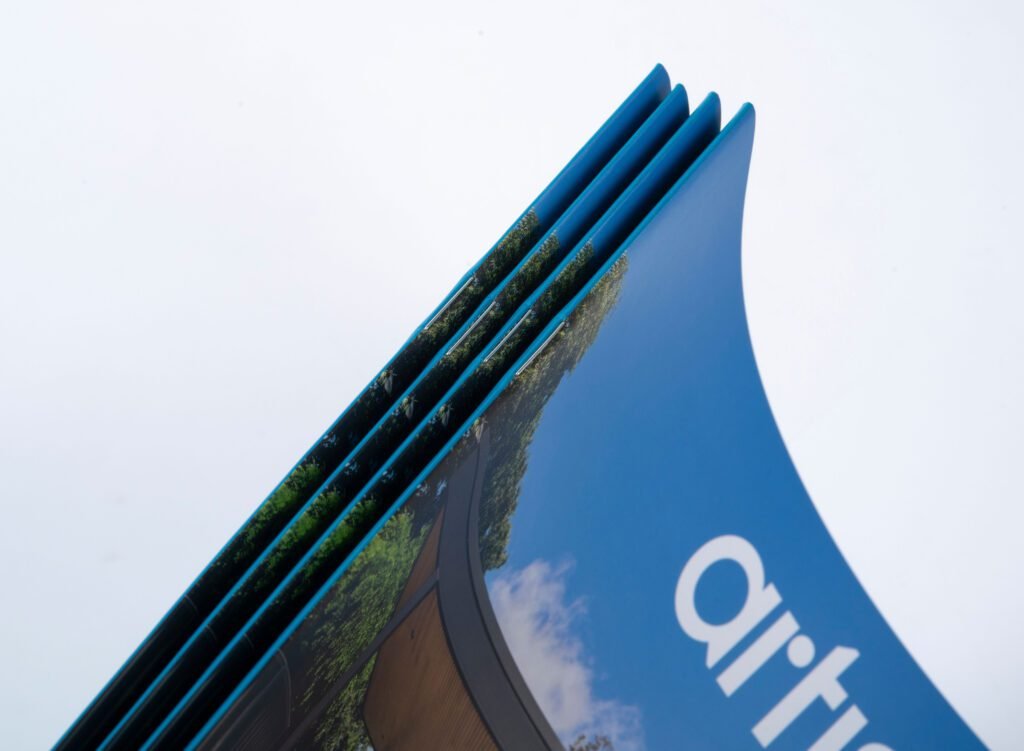
The Complete Guide to Booklet Printing in Australia
Booklet printing sounds simple until you’re filling in a quote request. Saddle stitch or perfect bound? A5 or A4? 130gsm or 170gsm? Each decision affects not only the cost and lead time, but also how your finished booklet looks, feels and performs in your customer’s hands.
A well-made booklet gives readers something they can return to long after a meeting or an event, which is why company profiles, product catalogues and training manuals still get printed. What it’s printed on now sits in that same conversation, particularly for organisations that report on their supply chain.
This guide covers the decisions that matter before you commit to a specification, so you can brief a printer accurately and get back a quote you can rely on.
What Counts as a Booklet (and When You’d Use Something Else)
A booklet is a short, bound publication, typically under 100 pages, used to explain, guide or inform. Think product guides, training manuals, event programs or course handbooks.
It’s worth distinguishing a booklet from its near neighbours:
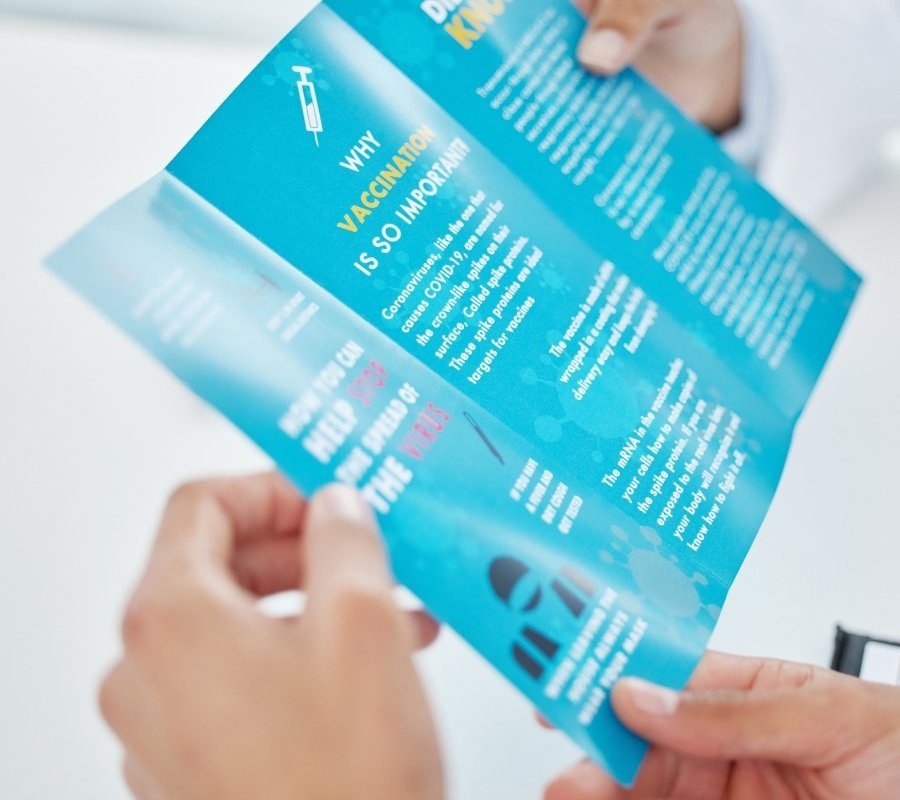
Brochure: usually a single folded sheet (bi-fold or tri-fold), built for a quick overview rather than sustained reading. If your content is one page of copy stretched across a few panels, you want a brochure, not a booklet.
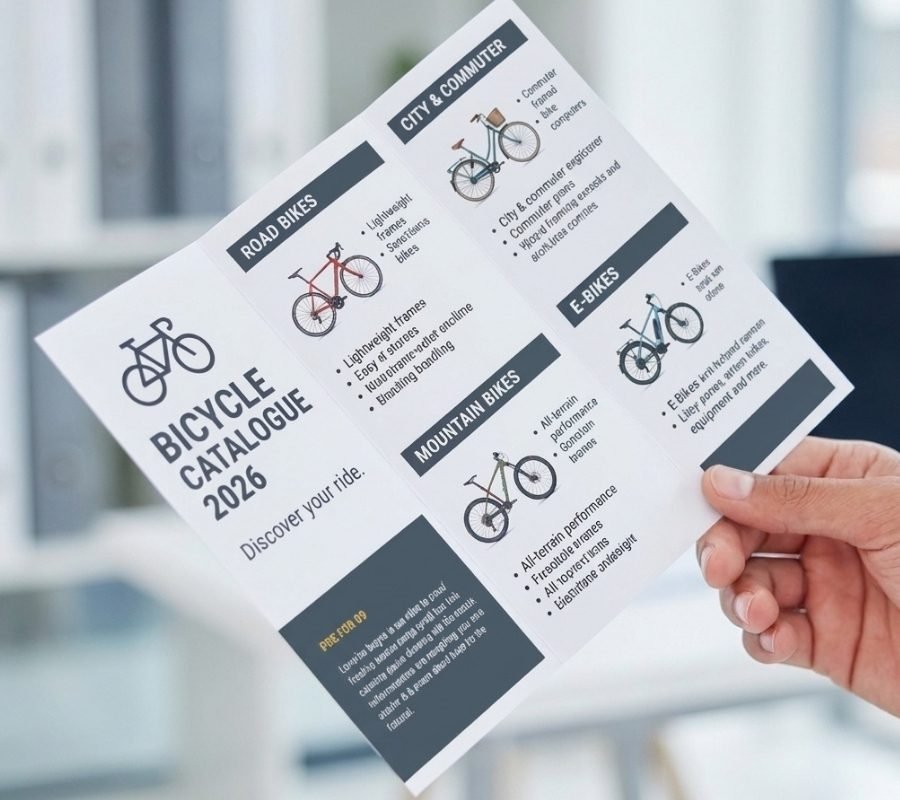
Catalogue: similar construction to a booklet but organised around a product range rather than a narrative or process.
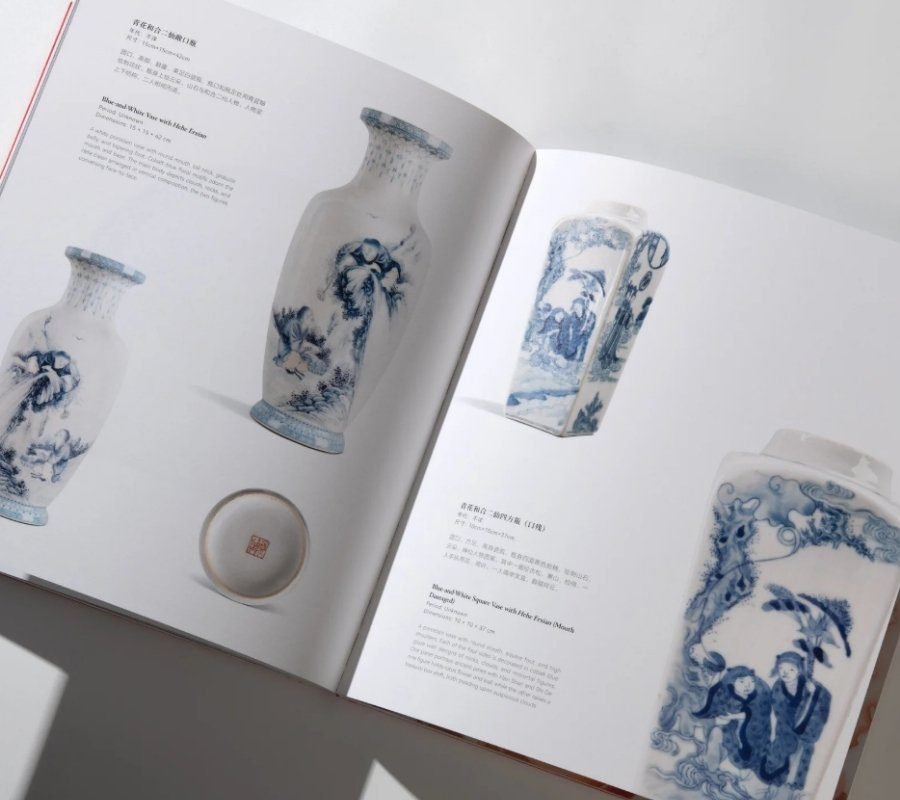
Book: generally longer, perfect bound or case bound, and intended for retail or long-term reference. If you’re past 100+ pages with a spine that needs to hold, you’re closer to a hardcover book than a booklet.
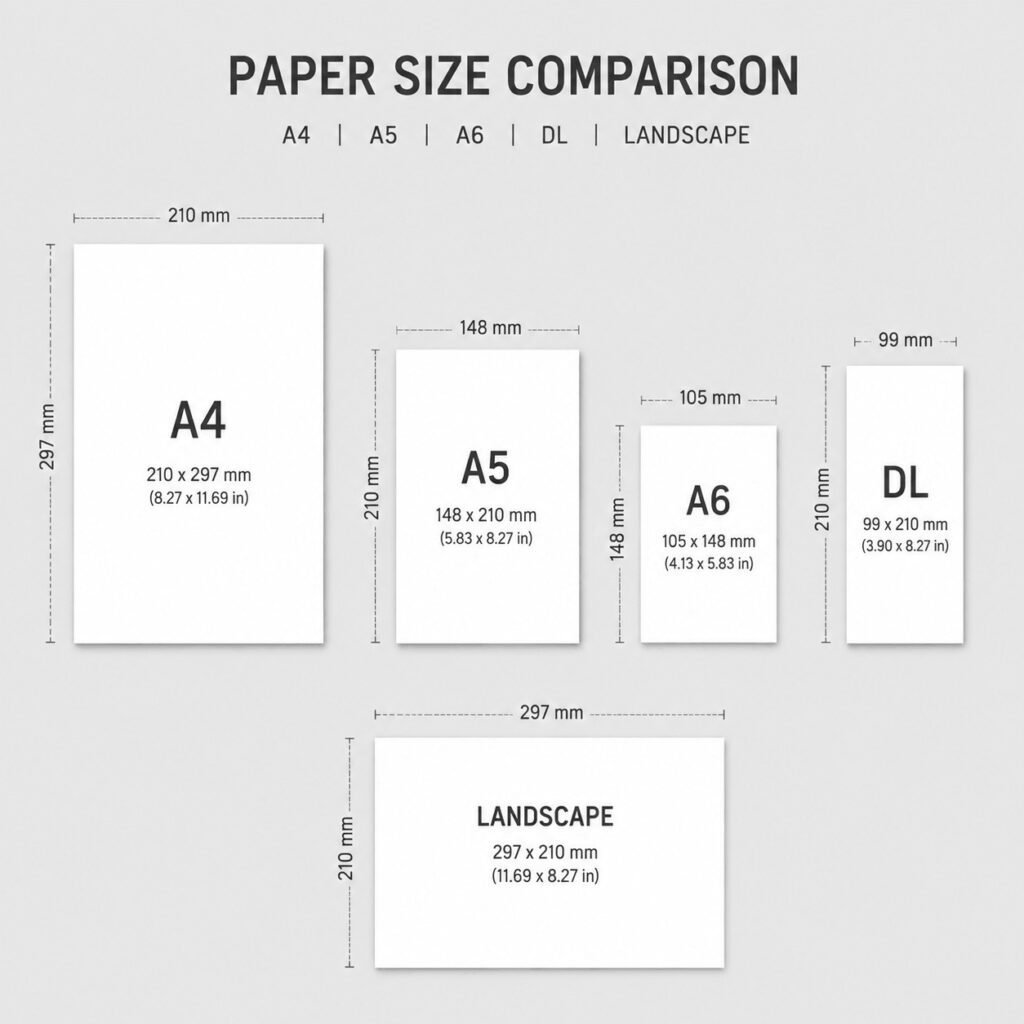
Booklet Sizes and Formats
Size affects both cost and how the booklet gets used:
- A4: the default for training manuals and reports, with plenty of room for layout without feeling cramped.
- A5: the most common choice for event programs, menus and handbooks. Compact enough to hold, roomy enough for imagery.
- A6: pocket-sized, suited to quick-reference guides or promotional handouts.
- DL: narrow and long, often used for price lists or step-by-step guides.
- Landscape: worth considering for photography-led content, where a wider canvas suits the imagery better than a portrait page.
Match the format to how the piece will actually be read, not just how it looks on screen.
Binding Methods Explained
The binding method affects durability, page count limits and unit cost, and it’s usually the first spec question we ask.
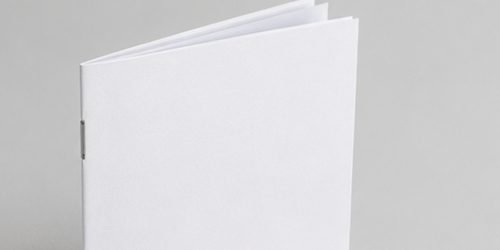
Saddle stitch: pages folded and stapled through the spine. Cost-effective and quick, and it works from 8 pages up to around 64. Good for programs, guides and shorter catalogues.
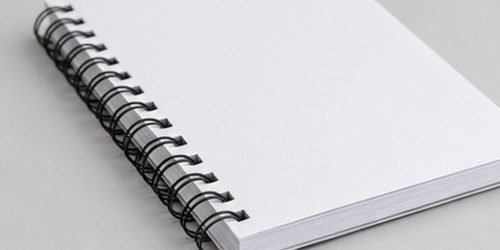
Wire-O: pages punched and bound with a metal spiral so the booklet opens completely flat. Practical for manuals, workbooks and anything that needs to stay open on a bench.
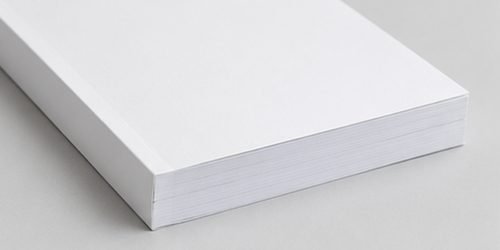
Perfect binding: pages glued to a flat spine, giving a squared-off, book-like edge. It needs enough bulk for the spine to hold, typically from around 32 pages depending on stock thickness, and suits higher counts and a more premium feel.
PUR binding: a stronger adhesive variant of perfect binding, more flexible and less prone to cracking, and suitable for booklets that get opened flat repeatedly.
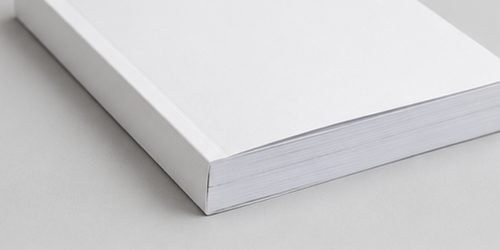
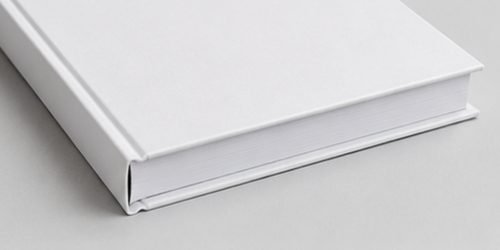
Case binding (hardcover): pages sewn or glued into a rigid cover, reserved for premium booklets or anything meant to last.
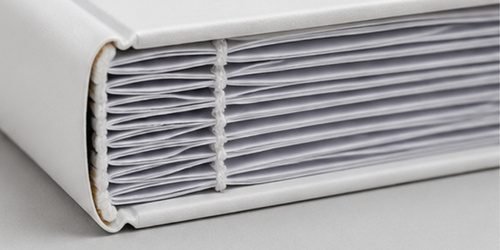
Smyth sewn: pages sewn in sections before binding, allowing the booklet to lie flat, often paired with case binding for higher-end pieces.
One rule catches almost every first-time booklet buyer: page counts must be multiples of four. A saddle-stitched booklet is built from folded sheets, and each sheet yields four pages, so your extent runs 8, 12, 16 and upward. Perfect binding is more forgiving because pages are glued individually, but most printers still plan in fours for press efficiency. Count the cover in your total, since it uses four of those pages.
Spine width comes from the page count and stock thickness together, so 40 pages on 170gsm stock carries a very different spine to 40 pages on 100gsm stock. We calculate it from your final specification before artwork goes to press.
Paper Stocks and GSM
Paper stock does more work than people expect. A heavier cover (250–350gsm) protects the booklet and signals quality before anyone reads a word, while inner pages typically sit between 100–170gsm, depending on how text- or image-heavy the content is.
Matte stock reads well and photographs without glare, a sensible default for text-driven booklets. Gloss stock lifts colour and contrast, suiting photography-led catalogues and lookbooks.
Sustainable Paper and Production Choices
For a growing number of organisations, sustainability is the first question rather than the last. FSC®-certified and recycled stocks are available across our booklet range, with certificate numbers provided on request, so the claim holds up when a procurement team asks for evidence.
Specification affects footprint as much as sourcing does. Ordering close to what you’ll actually use avoids an overrun sitting in storage until it’s out of date, and a lighter inner stock reduces both paper volume and freight weight. Our manufacturing facility is Green Factory-certified, with production planned to minimise offcut waste.
For what a genuine sustainability claim should include, beyond a logo on a back cover, see our guide to sustainable printing in Australia.
Cover Finishes
Finishes are where a booklet moves from functional to memorable:
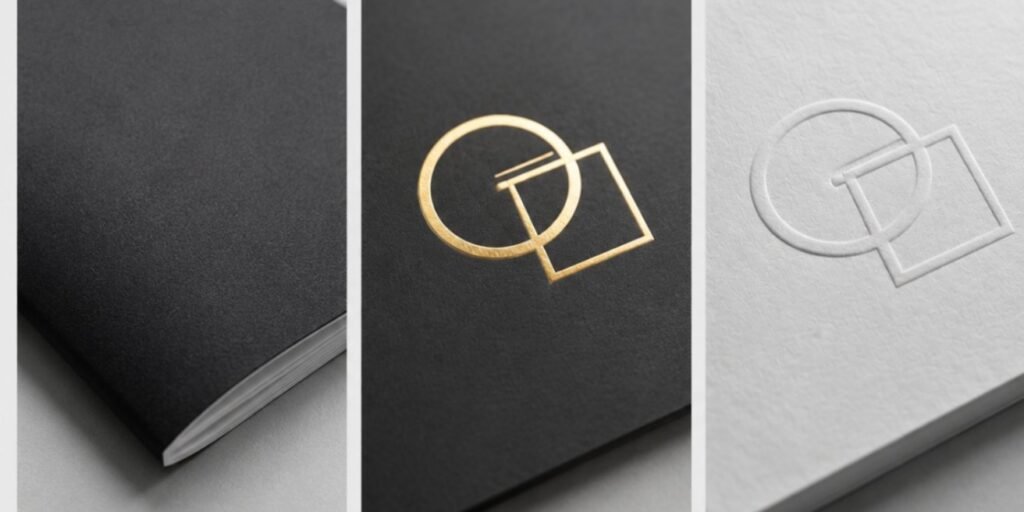
Soft-touch laminate: a matte, velvety texture that feels premium in hand, popular for corporate and hospitality booklets.
Foil stamping: metallic or coloured foil applied to logos or titles, effective for launches and limited editions.
Embossing: raised or recessed detail that adds tactile interest without relying on colour.
Premium finishes add cost, so they earn their place on client-facing work more readily than on internal documents.
Run Sizes and Unit Cost
The right quantity depends on how the booklet gets distributed and how often the content changes.
- Medium run (200–1,000): a strong balance between cost efficiency and flexibility, making it a popular choice for recurring business publications.
- Large run (1,000–50,000): offers the lowest unit cost through offset printing and is generally the most economical option for high-volume projects.
Quantity is only one lever. Page count and binding method usually move the number most, followed by stock weight and any finishing. Foil and embossing have their own setup costs, so they weigh more on a short run than on a long one.
Common Booklet Printing Mistakes to Avoid
Some of the most common issues include:
- Choosing a binding method that doesn’t suit the page count.
- Selecting paper stock based purely on thickness rather than intended use.
- Leaving insufficient time for proofing before production.
File Prep Essentials
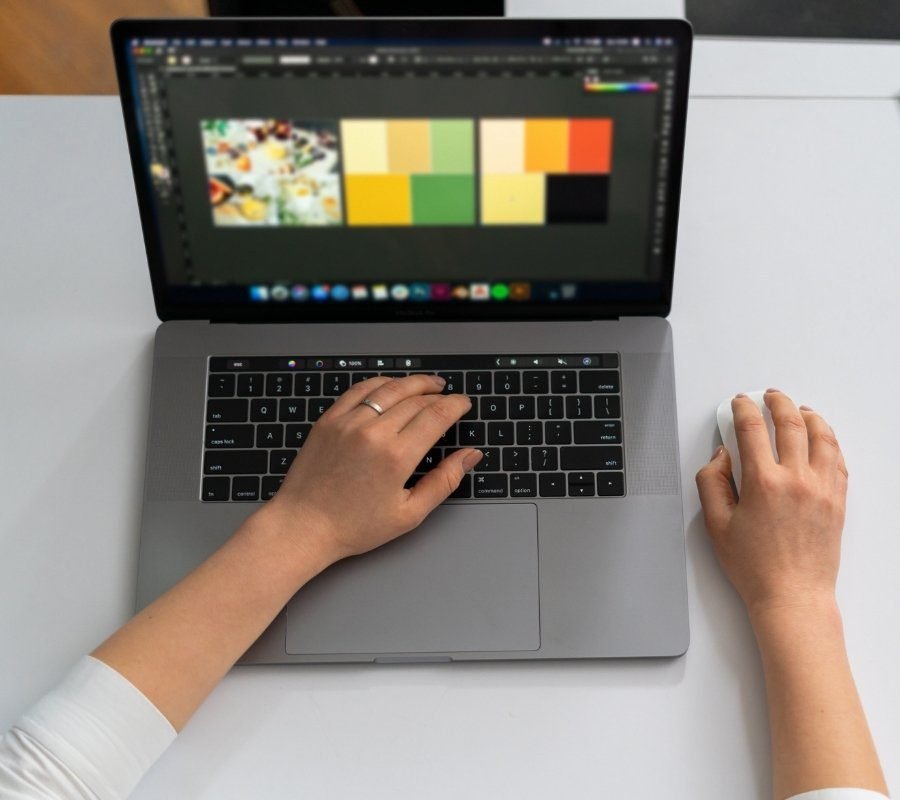
Clean files avoid delays. As a starting point:
- Supply a print-ready PDF with a 3mm bleed on all edges.
- Supply images at 300 dpi at the final print size. Anything scaled up from web resolution will look soft on press.
- Keep critical text and imagery inside the trim line with a safe margin.
- Use CMYK colour mode, not RGB, to avoid colour shifts.
- Send vector files (AI/EPS) for logos wherever possible to ensure the sharpest reproduction.
We run technical pre-press checks on every file before production, and our artwork setup guide covers this in more detail for first-timers.
How to Brief Your Booklet Print Job
Getting an accurate quote comes down to three steps:
1. Choose your binding method: saddle stitch, Wire-O, perfect binding, PUR or case binding.
2. Set your specs: trim size, orientation, page count, paper stock and cover finish.
3. Pick your run size: based on your budget and how often you’ll reorder.
From there, you’ll get a free digital proof within 24 hours. If you want to check the stock and finish in person, physical samples are quoted separately and take 7 to 15 business days, so allow for that in your timeline.
FAQ
Getting Your Booklet Specification Right
Most booklet problems trace back to a spec decision made early and revisited too late. Settle your page count in multiples of four first, since the binding options follow from it, then choose stock and finish. Get the order right, and the quote you receive will be accurate.
If you’re ready to start your next custom booklet printing project, explore our Booklet Printing services or speak with the Forest Print team about the specifications best suited to your publication.